
Definitive Guide to Tracking Brand Mentions in LLMs
Definitive Guide to AI Brand Monitoring: Tracking Brand Mentions in Large Language Model Analytics for Business Visibility and Reputation

By Fae Esparza, Start Solutions AI
In the era of rapidly evolving technology, monitoring brand mentions has become a crucial aspect for businesses seeking visibility and reputation in a crowded marketplace. This comprehensive guide dives into the intricacies of tracking brand mentions using Large Language Models (LLMs), highlighting their significance in AI-driven analytics. Readers will learn about the essential role that LLMs play in analyzing brand mentions, the techniques employed in effective tracking, and the tools available for monitoring purposes. Understanding these concepts is vital for businesses that aim to leverage AI to refine their brand strategies and maintain competitive advantages.
Effective tracking of brand mentions enables businesses to respond swiftly to consumer sentiment, enhance their reputational management, and inform strategic decisions. This guide will provide insights into the functionalities of LLMs, methodologies for monitoring, and practical applications across various industries. As we navigate through the article, we will delve into future trends and best practices that shape AI brand mention tracking, illustrating how businesses can optimize their visibility and engagement.
What Are Large Language Models and Why Do Brand Mentions Matter in AI-Driven Analytics?
Large Language Models (LLMs) are sophisticated AI systems designed to understand and generate human-like text. They utilize deep learning techniques to grasp context, semantics, and nuances in language, making them invaluable for brand monitoring tasks. Brand mentions are essential in AI-driven analytics, as they provide insights into public sentiment, awareness, and engagement surrounding a brand. Tracking these mentions allows organizations to gauge their market positioning and adjust strategies accordingly.
LLMs significantly influence brand reputation analysis, shaping how brands perceive their presence in the discourse of consumers. They facilitate the identification of sentiment and trends, allowing businesses to maintain proactive communication with their audience. This capability is particularly vital, as consumer opinions can sway brand perception and influence purchasing behaviors.
Understanding Large Language Models in AI Brand Monitoring

LLMs work by analyzing vast datasets to understand human language patterns and generate relevant content. In the context of brand monitoring, they offer powerful tracking capabilities. By processing real-time data from social media platforms, reviews, blogs, and more, LLMs can identify how often and in what context a brand is mentioned. For instance, tools leveraging LLMs can discern whether mentions are positive or negative, providing businesses with actionable insights into product reception and customer satisfaction.
Thanks to their vast training data, LLMs also enhance entity understanding, recognizing specific brand nuances and competitor mentions. This understanding leads to better content structuring and ensures that businesses can tailor their messaging based on nuanced consumer insights. Efforts to leverage these models can result in improved customer relations and a proactive stance on reputation management.
How Brand Mentions Influence AI-Driven Brand Reputation Analysis
The influence of brand mentions on AI-driven analysis extends to multiple facets of reputation management. Consistent tracking of these mentions allows brands to conduct visibility analysis, understanding their standing compared to competitors. This competitive insight enables brands to identify strengths and weaknesses in their market strategies.
For instance, recent case studies reveal that brands responding swiftly to negative mentions witness a significant recovery in their reputation, illustrating the importance of monitoring in real-time. Companies that employ AI-driven systems can also utilize comparative analysis to refine their marketing efforts, thus ensuring alignment with current consumer expectations. The proactive approach to managing brand mentions ultimately fosters trust and credibility among consumers.
How Does AI-Powered Brand Mention Tracking Work in LLM Content Monitoring?
AI-powered brand mention tracking utilizes a variety of sophisticated techniques to capture brand mentions accurately within content produced by LLMs. The methodologies involved are crucial for ensuring that organizations receive relevant and actionable data. These systems leverage Natural Language Processing (NLP) techniques to detect mentions in varied contexts, engaging with large amounts of text seamlessly.
Techniques for Accurate Detection of Brand Mentions within LLM Outputs
Detecting brand mentions requires a blend of advanced NLP and machine learning techniques. For instance, keyword extraction algorithms can flag notable occurrences of brand names in diverse textual datasets. Contextual analysis is also employed, where machine learning models learn from existing data to predict mentions accurately.
Another effective method involves entity recognition, allowing models to understand various forms of a brand, such as abbreviations, synonyms, or common misspellings. These sophisticated detection methodologies provide businesses with comprehensive visibility, ensuring that nothing slips through the cracks.
Leveraging AI-Driven Brand Insights for Real-Time Monitoring
Utilizing insights from AI-powered monitoring systems opens avenues for real-time adjustments in marketing strategies. Businesses can harness AI analytics to track brand sentiment and resolve crises as they arise. This proactive engagement is crucial, particularly in an age where consumers expect immediate responses.
By establishing feedback loops between monitoring and content adaptation, brands can optimize their messaging based on audience reactions. The integration of AI allows companies to not only react swiftly but also predict future trends and customer behaviors, making them more agile and responsive in a fast-paced environment.
Which Tools and Technologies Enable Effective AI Brand Monitoring and LLM Content Tracking?
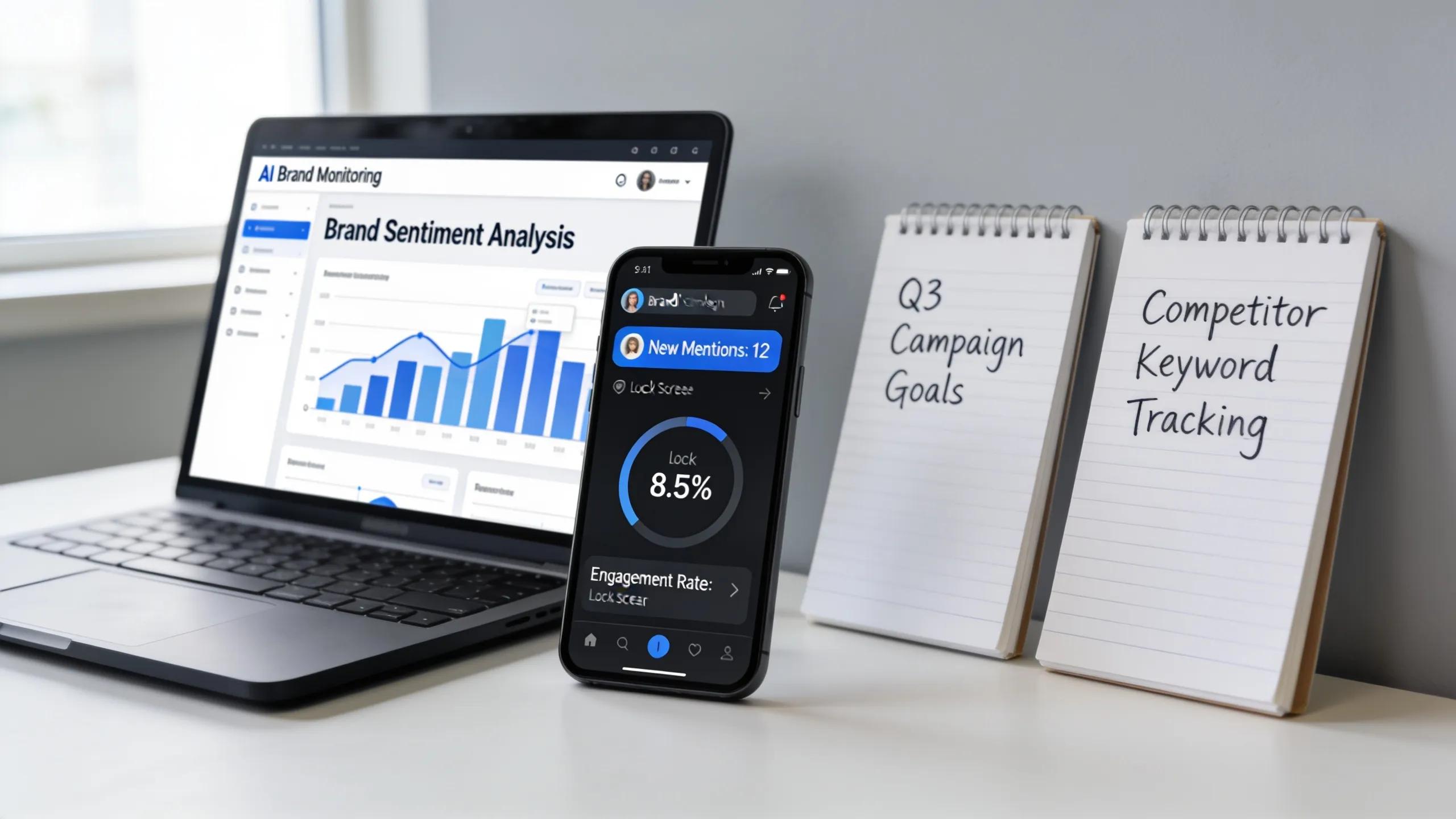
Effective AI brand monitoring is underpinned by enlisting the right tools and technologies. The evaluation of these tools involves understanding their specific features, usability, and impact on brand visibility. Businesses today have various options for LLM content tracking, ranging from specialized AI platforms to bespoke monitoring solutions.
For instance, understanding the nuances of various SEO tools can significantly assist in selecting the most appropriate solution for a business's unique needs. The right platform can offer advanced analytics, real-time alerts, and customizable reporting, all crucial for maintaining a competitive edge.
Evaluating AI Brand Reputation Tools Focused on LLM Analytics
| Tool | Features | Pricing Structure |
|---|---|---|
| Tool A | NLP capabilities, sentiment analysis | $199/month |
| Tool B | Real-time tracking, historical data analytics | $299/month |
| Tool C | Custom reporting, API integrations | $399/month |
This structured evaluation allows brands to assess which tools align with their strategic goals and budget while also enhancing their market position through effective monitoring.
Benefits of Free Baseline Snapshots for Measuring Initial Brand Visibility
Many brands often overlook the importance of conducting initial assessments to establish a baseline for brand visibility. Free baseline snapshots provide essential insights into where a brand stands at the outset.
The advantages of these snapshots are manifold:
- Initial Visibility Assessment: Understanding current market positioning and awareness among target audiences.
- Gap Identification: Detecting areas where brands need to improve visibility or adjust messaging.
- Competitor Analysis Impact: Benchmarking against competitors to strategize future efforts effectively.
Using these free assessments, businesses can create strategic plans that position them effectively within their industry while understanding their operational landscape.
Who Benefits Most from AI Brand Visibility Services Focused on LLM Data and How?
The impact of AI brand visibility services ripples through various sectors, with certain professionals benefiting immensely from these advanced tools. Coaches, educators, and course creators are among those who can leverage AI tracking effectively. Understanding how these services work enables a more targeted approach to brand visibility.
Use Cases for Coaches, Educators, and Course Creators in AI Brand Tracking
Coaches and educators can significantly enhance their outreach and engagement through AI-driven insights. For example, a coach can track mentions on social media platforms to gauge the effectiveness of their marketing campaigns. An understanding of how their content resonates with audiences allows them to refine approaches based on real-time feedback and community engagement.
Course creators can utilize AI monitoring to assess course perception and examine student feedback. By continuously adapting their content in response to AI insights, they can elevate learner experiences and drive course enrollments through enhanced brand visibility.
How AI Visibility Increases Lead Generation and Credibility for Professionals
Professionals leveraging AI visibility services can expect a marked increase in lead generation. By maintaining an active online presence and tracking mentions, professionals build credibility that fosters trust among potential clients. Notably, individuals who respond to mentions or reviews effectively tend to see enhanced engagement rates and customer loyalty.
This enhanced credibility is often supported by data-driven strategies, making it vital to understand data-driven marketing. By leveraging insights gained from LLM tracking and AI analytics, professionals can identify opportunities for networking and collaboration, further expanding their footprint in their respective fields. Ultimately, AI visibility transforms passive marketing into active engagement, propelling professionals toward their goals.
What Are the Future Trends and Metrics Shaping AI Brand Mention Tracking in LLMs?
The landscape of AI brand mention tracking is continually evolving, driven by innovations in technology and changes in consumer behavior. Staying abreast of future trends will equip businesses to navigate the nuances of brand awareness and reputation management more effectively.
Emerging Predictive Analytics and Growth Projections for AI Brand Visibility
Predictive analytics is emerging as a game-changer in AI brand monitoring. By analyzing patterns within data, businesses can forecast trends and prepare for shifts in consumer sentiment. This forward-thinking approach transforms monitoring from reactive to proactive strategies.
As technology progresses, businesses can expect comprehensive tools integrating advanced analytics that recommend specific actions based on predicted outcomes. Organizations that adopt these methodologies will stand out as industry leaders, capable of responding swiftly and correctly to emerging trends.
Measuring Success: Key Performance Indicators for AI Brand Mention Monitoring
Establishing effective key performance indicators (KPIs) is essential for measuring the success of AI brand mention monitoring. Key metrics to track include:
- Volume of Mentions: Total brand mentions tracked over time to evaluate visibility.
- Sentiment Analysis: Breakdown of positive, negative, and neutral mentions to gauge public perception.
- Engagement Rates: Analyzing how audiences interact with brand content provides insights into effectiveness.
Monitoring these KPIs allows brands to adapt marketing strategies dynamically, demonstrating continuous improvement and fortified presence in the market.
How to Implement and Optimize AI Brand Mention Tracking for Maximum Visibility?
For businesses to establish a robust AI brand mention tracking system, thoughtful implementation and continuous optimization are key. Companies must integrate structured data and leverage semantic SEO to enhance their visibility and accuracy in tracking.
Best Practices for Integrating Structured Data Markup and Semantic SEO
Incorporating structured data markup can dramatically improve how search engines interpret brand content. This, in turn, enhances discoverability across platforms.
Best practices include:
- Utilizing Schema Markup: Implement JSON-LD structured data to provide explicit information about entities.
- Incorporating Targeted Keywords: Semantic SEO practices should prioritize keywords relevant to the brand and its offerings.
- Regular Content Updates: Staying current with industry trends ensures content remains relevant and engaging.
These strategies collectively improve the chances of being recognized and ranked favorably by search engines. For a deeper understanding of how search engines interpret content, exploring semantic SEO is highly recommended.
Strategies for Effective Internal Linking and Content Updates in AI Monitoring
Implementing effective internal linking strategies fortifies content accessibility while improving SEO metrics.
Key strategies involve:
- Creating Comprehensive Content Hubs: Group related topics together for enhanced information flow.
- Frequent Content Audits: Regularly assess and refresh older content to maintain relevance and accuracy.
- Leveraging Data-Driven Insights: Use analytics to detect which content drives engagement, informing future updates based on user behavior.
This systematic approach results in a well-structured ecosystem that encourages user engagement and improves operational metrics across brand monitoring initiatives.