Knowledge Graph Citations: Boost Your AI Visibility with Entity SEO
Knowledge Graph Citations: Boost Your AI Visibility with Entity SEO
By Start Solutions AI Editorial Team · Updated 2026-07-16
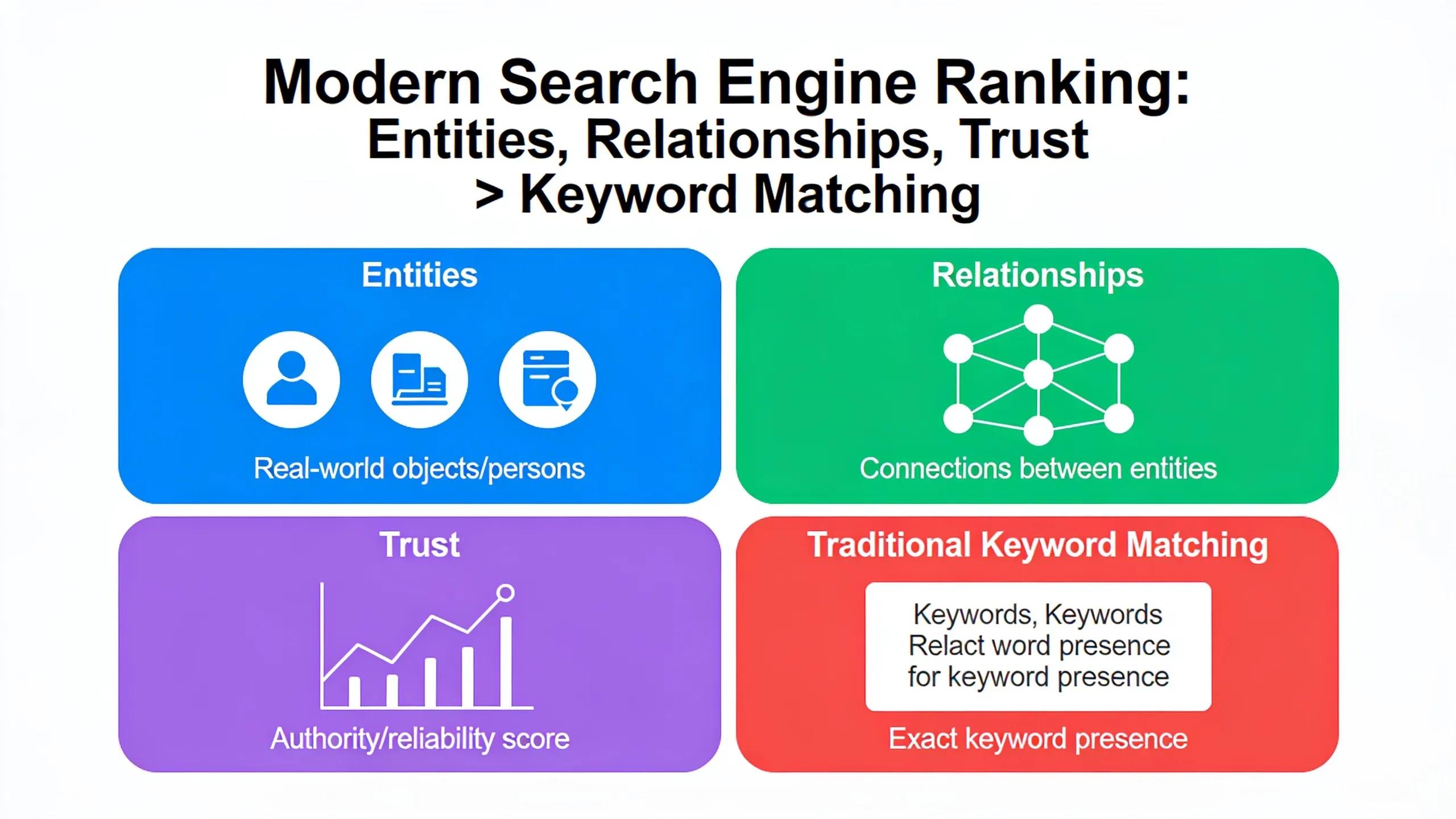
Knowledge graphs and citation signals determine whether AI engines like ChatGPT, Gemini. Perplexity recognize a brand as a trusted entity worth recommending. Modern AI search ranks based on entities, relationships, and trust not keywords alone. Experts without structured entity recognition lose visibility in AI-generated answers, regardless of content quality.
Key Takeaways
Knowledge Graph SEO ranks pages on entities, relationships, and trust signals instead of keyword matching alone.
Start Solutions.ai tracks AI visibility across ChatGPT, Perplexity, Gemini, and Google monthly for clients.
Search engines connect your brand to relevant answers through entity authority and proof signals.
Citation signals establish credibility by showing search engines and AI systems how topics interconnect.
Why Do Knowledge Graph Citations Shape AI Visibility?
Knowledge graph citations determine whether AI engines recognize a brand as a credible, well-defined entity or ignore it entirely. Modern search engines rank based on entities, relationships, and trust, not keyword matching alone.
AI Overviews, Knowledge Panels, and conversational search tools all rely on structured knowledge to generate answers. Traditional keyword signals no longer drive these high-visibility features. A brand that lacks clear entity definition forces AI systems to guess. And guessing produces wrong service descriptions, missed recommendations, and lost opportunities.
What Happens When a Brand Isn't Recognized as an Entity?
When a brand is not clearly defined as an entity, search engines and AI systems fill the gap with assumptions. Those assumptions frequently misrepresent services, audiences, and areas of expertise. The result is reduced visibility precisely where decision-ready audiences are asking for recommendations.
How Do AI Citation Signals Connect to Knowledge Panel Readiness?
AI citation signals — the structured content, authority markers, and entity relationships that AI engines consume that feed directly into knowledge panel readiness. A brand with strong citation signals earns a consistent, accurate presence across AI-generated answers. Start Solutions AI tracks visibility across ChatGPT, Perplexity, Gemini, and Google's AI every month, measuring how accurately each platform understands a client's business. That monthly measurement reveals exactly where entity gaps are costing experts their discoverability.

How Do AI Citation Signals Determine Who Gets Recommended?
AI citation signals are the structured cues that allow AI engines to discover, understand, trust, and associate a business with the right topics, services, and audiences — and recommendation is the outcome of that entire chain, not a shortcut. Businesses that skip any one of those four steps remain invisible to AI-generated answers, regardless of how strong their social media presence is.
What Does an AI Engine Need Before Recommending a Business?
Before an AI engine names a business in a response, four conditions must be met:
Discovery — the AI must find the business in its training data or live index
Understanding — the AI must clearly map what the business does and who it serves
Trust — proof signals, authority markers, and consistent entity data must be present
Topic association — the business must be linked to the right services and audiences
Miss one condition, and the recommendation never happens.
How Does a Knowledge Graph Support AI Citation Signals?
A structured SEO knowledge graph connects a brand's services, people, topics. Proof signals so AI systems can match the business to the right answers. This is the operational foundation behind knowledge graph citations and knowledge panel readiness. The measurable indicators that determine whether an AI engine surfaces a business or a competitor instead.
Start Solutions AI strengthens this visibility across ChatGPT, Gemini, Perplexity, Google AI Mode, and Copilot. The practice is also recognized under the terms Answer Engine Optimization (AEO) and Generative Engine Optimization (GEO).

What Steps Build Knowledge Panel Readiness for Experts?
Knowledge panel readiness begins with turning scattered facts about a brand into connected entities that search engines and AI systems can trust. Experts who skip this foundational work remain invisible to AI-generated answers, regardless of how strong their social media presence is.
The core technical steps follow a clear sequence:
Establish a baseline — measure current AI visibility before any optimization begins
Model entity relationships — map how the brand, its services, and its audience connect
Publish JSON-LD schema — embed structured data so AI systems can read entity relationships directly
Connect off-site signals — build authoritative mentions that reinforce the brand's identity across the web
Measure citation impact — track how visibility shifts across AI engines over time
Why does a baseline snapshot matter before optimization?
Optimization without measurement is guesswork. Start Solutions AI establishes a baseline snapshot of current AI visibility before recommending any changes, capturing exactly where a brand stands across major AI engines. That starting point makes every subsequent improvement measurable.
Who benefits most from building ai citation signals?
Real estate and finance educators, wealth coaches, investor mentors, and course creators face the sharpest risk here. These experts rely on AI-generated recommendations to reach new clients, yet most have no structured knowledge graph citations in place. Without connected entity data, AI systems cannot confidently surface their names and that silence costs them clients every day.
FAQ
What platforms does Start Solutions AI track for AI visibility?
What four conditions must be met before an AI engine recommends a business?
An AI engine requires discovery, understanding, trust, and topic association missing any single condition prevents the recommendation from happening.
What happens when a brand lacks clear entity definition in a knowledge graph?
Search engines and AI systems fill the gap with assumptions, frequently misrepresenting services, audiences. Areas of expertise, which reduces visibility where decision-ready audiences seek recommendations.